
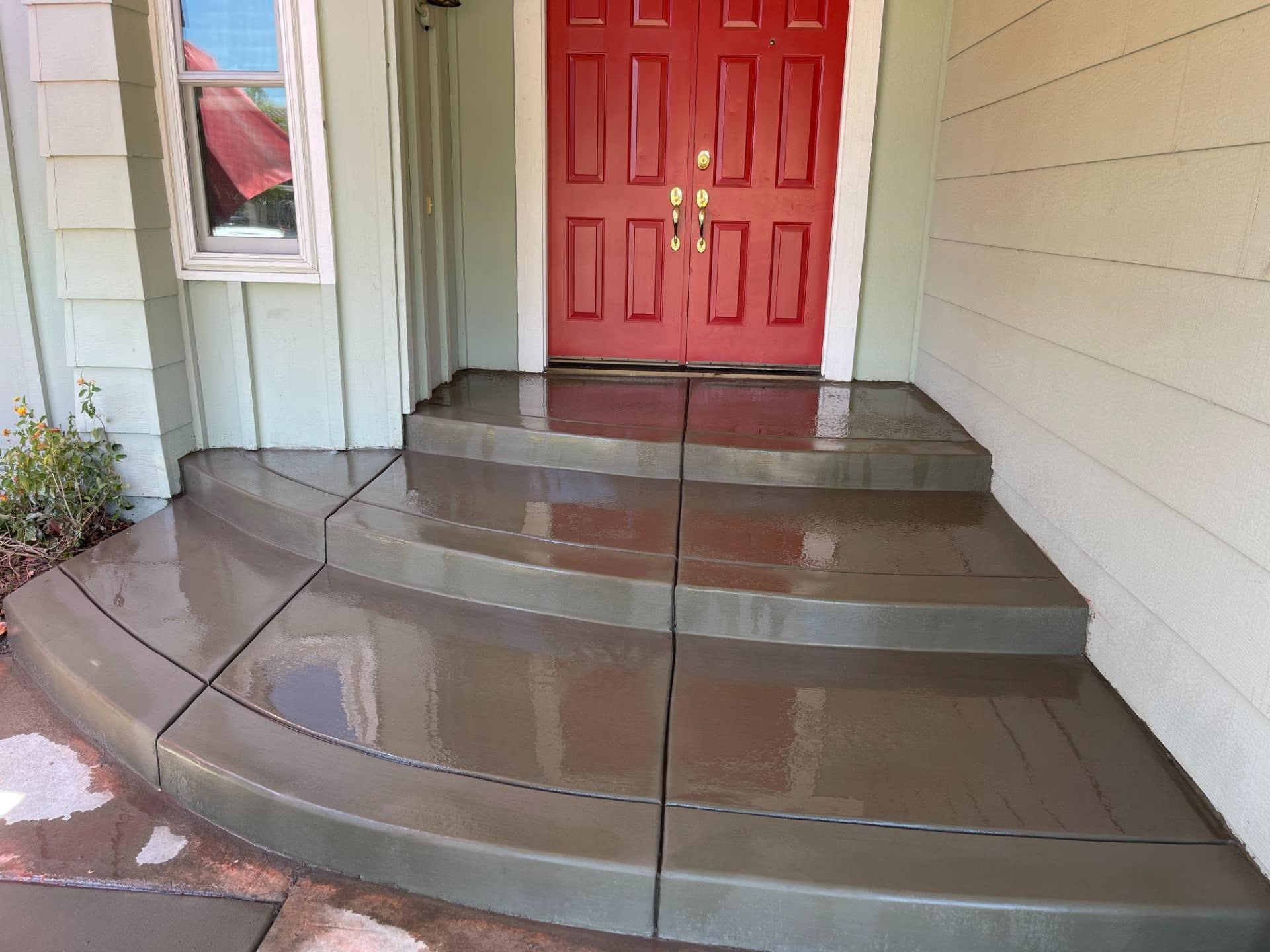
Concrete Steps
The concrete step installation process can be meticulous, but with over ten years of experience in concrete stairs, we have it all under control. Steps are also the area of flatwork examined most closely.
Steps are governed by code, because they are the one element people fall on. Riser height and tread depth have to be consistent from top to bottom. A single riser half an inch out of tolerance is a trip hazard.
Below the set, the footing determines everything. Steps carry their own weight plus live load on a small footprint, at the point where a structure meets ground that moves. A footing on undisturbed soil prevents a flight from settling.
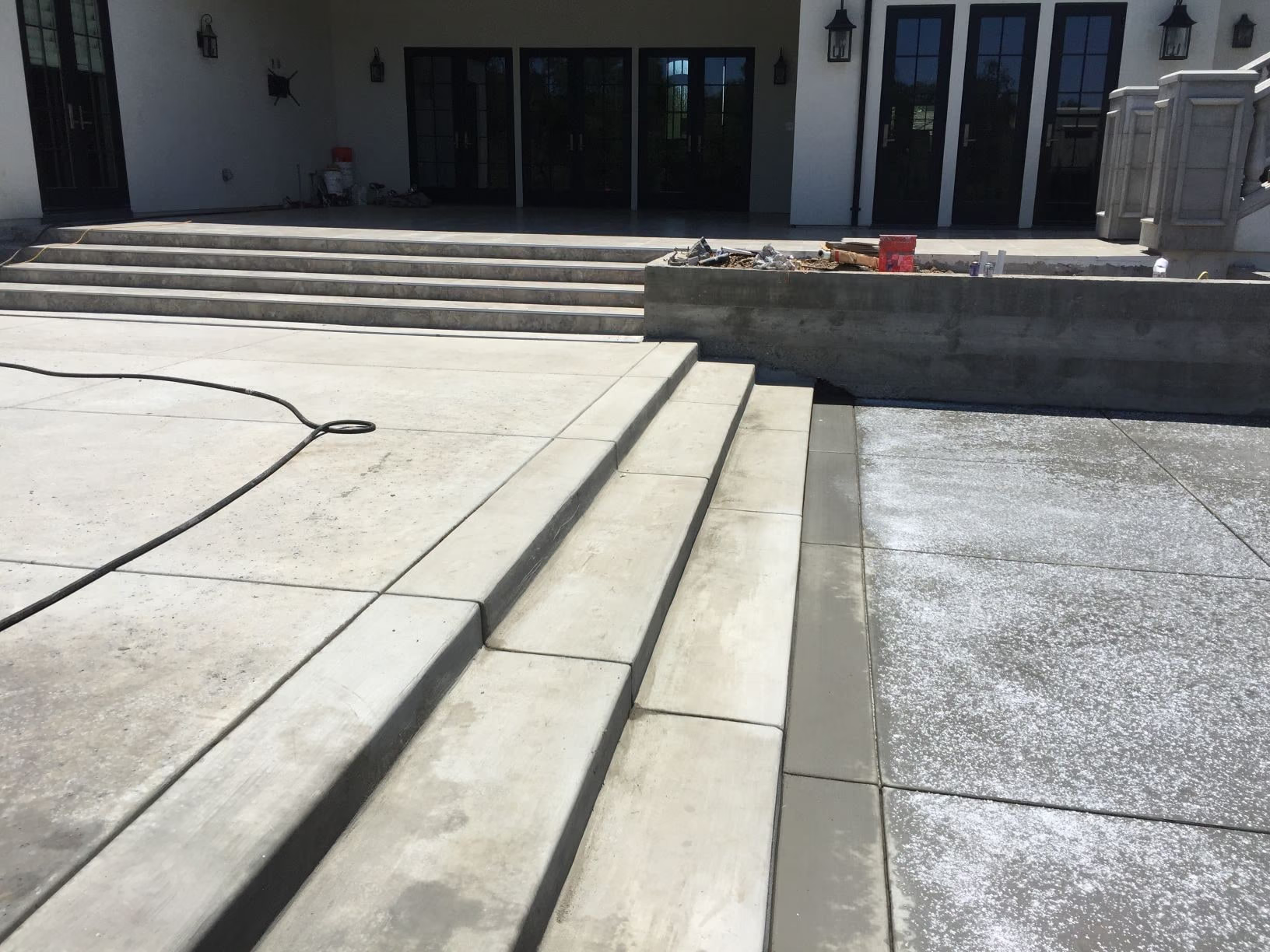
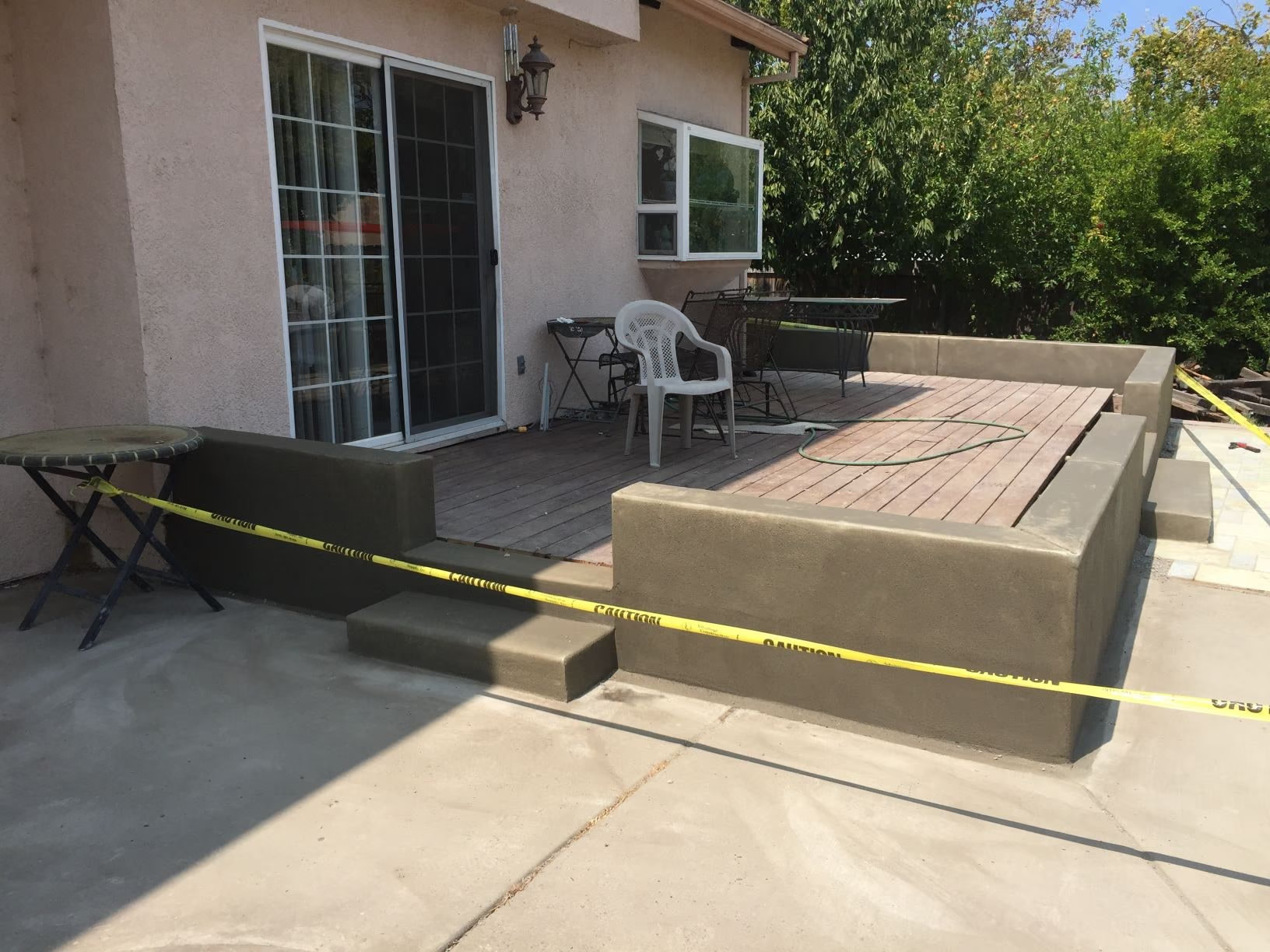
Concrete step and stair installation in Sacramento
CA Pro Concrete builds entry steps, porch and landing steps, steps down into a yard, and replacements for sets that have cracked or separated from the house. Steps are the smallest concrete job on most properties and the one with the narrowest tolerances.
Three requirements govern the work. Every riser in a set must be the same height, treads must be deep enough to take a full foot, and the surface must provide traction when wet. A variation of a quarter of an inch between risers is sufficient to create a trip hazard on a set used every day.
What is included in a concrete step project
Steps are priced by the set rather than by area, because forming accounts for most of the labor. These are the three stages.
Setting out risers and treads
Total rise is measured and divided so that every riser is the same height, and tread depth is sized to take a full foot. Uneven risers are the most common fault in the sets we are asked to replace.
Footing and reinforcement
Steps are built on a reinforced footing and tied to it. Sets that separate from a house and tip forward have settled on ground that was not prepared.
Textured tread finish
A broom or textured finish across each tread, with a clearly defined nosing. Traction on entry steps is a safety requirement rather than a matter of appearance.
Recent Concrete Steps
Why choose CA Pro Concrete for your steps
- Consistent riser heights
- Total rise is measured and divided before forming begins. A set with one riser half an inch out of tolerance remains a trip hazard for the life of the structure.
- Traction when wet
- Treads are given a textured finish rather than a smooth trowel. On entry steps this is the difference between a safe surface and a hazardous one.
- Built on a footing
- Steps are constructed on and tied into a footing, which prevents the set settling away from the house and tipping forward.
- CSLB License #1024813
- Licensed with the California State License Board, fully insured, and fifteen years of residential concrete work across the Sacramento area.
Concrete step questions
If your question is not answered here, contact CA Pro Concrete directly. We assess every job on site and provide a written estimate at no charge.
How much do concrete steps cost in Sacramento?
Steps are priced by the set, and the number of steps is the primary cost driver. A three-step and a seven-step set in the same doorway represent substantially different amounts of forming work, and forming accounts for most of the labor on a stair job.
Additional factors are whether an existing set must be demolished and hauled away, ground conditions at the entry, and whether provision for a railing is required. Estimates are provided on site at no charge.
What are the correct dimensions for a concrete step?
The governing principle is consistency: every riser in a set at the same height, every tread at the same depth. A variation of a quarter of an inch is detectable underfoot and is the origin of most trips on residential stairs.
Treads must also be deep enough to take a full foot comfortably, and exterior steps are set out with a slight fall across the tread so water drains rather than standing. Residential stair dimensions are governed by code, and we build to it.
Can concrete steps be made less slippery?
Yes, and the most effective point to address it is at the pour. A broom or textured finish across each tread maintains traction when the surface is wet. Smooth troweled or heavily sealed steps are the surfaces that present a slip risk.
On an existing set, a non-slip surface treatment or a textured resurfacing can be applied. Where the set is also cracked or settling, both should be addressed together rather than treating the surface twice.
Why are my concrete steps pulling away from the house?
The ground beneath the set has settled. Steps poured over fill or over soil that was not compacted sink at the outer edge over time, which tips the set forward and opens a gap at the structure. Water then enters that gap and accelerates the movement.
A set that has begun to move is normally rebuilt on a proper footing rather than patched, as filling the gap addresses the symptom and the set continues to settle. Concrete repair covers cases that have not reached that stage.
Can a railing be added to concrete steps?
We set out the steps with the railing position established and leave the necessary provision in the pour, which produces a better result than core drilling a finished set later.
The railing itself is metal fabrication rather than concrete work and is normally supplied and installed by a fabricator. Where a railing is planned, raise it at the estimate, as it affects how the set is formed.
More Concrete Work
Other work we do around Sacramento
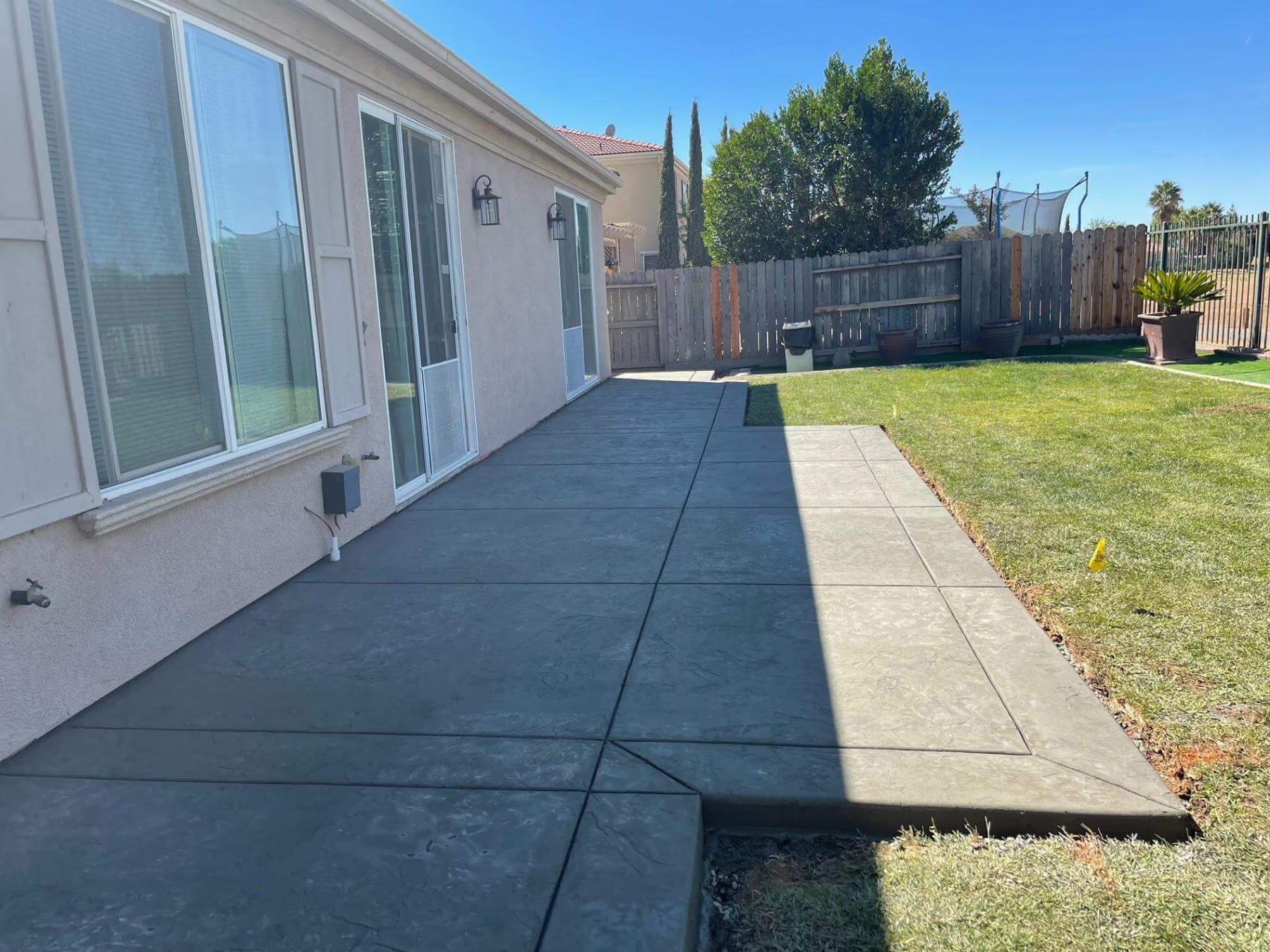 Sidewalks & WalkwaysWe specialize in creating durable and visually appealing concrete walkways, with the attention to detail that keeps every path on a property matching.View
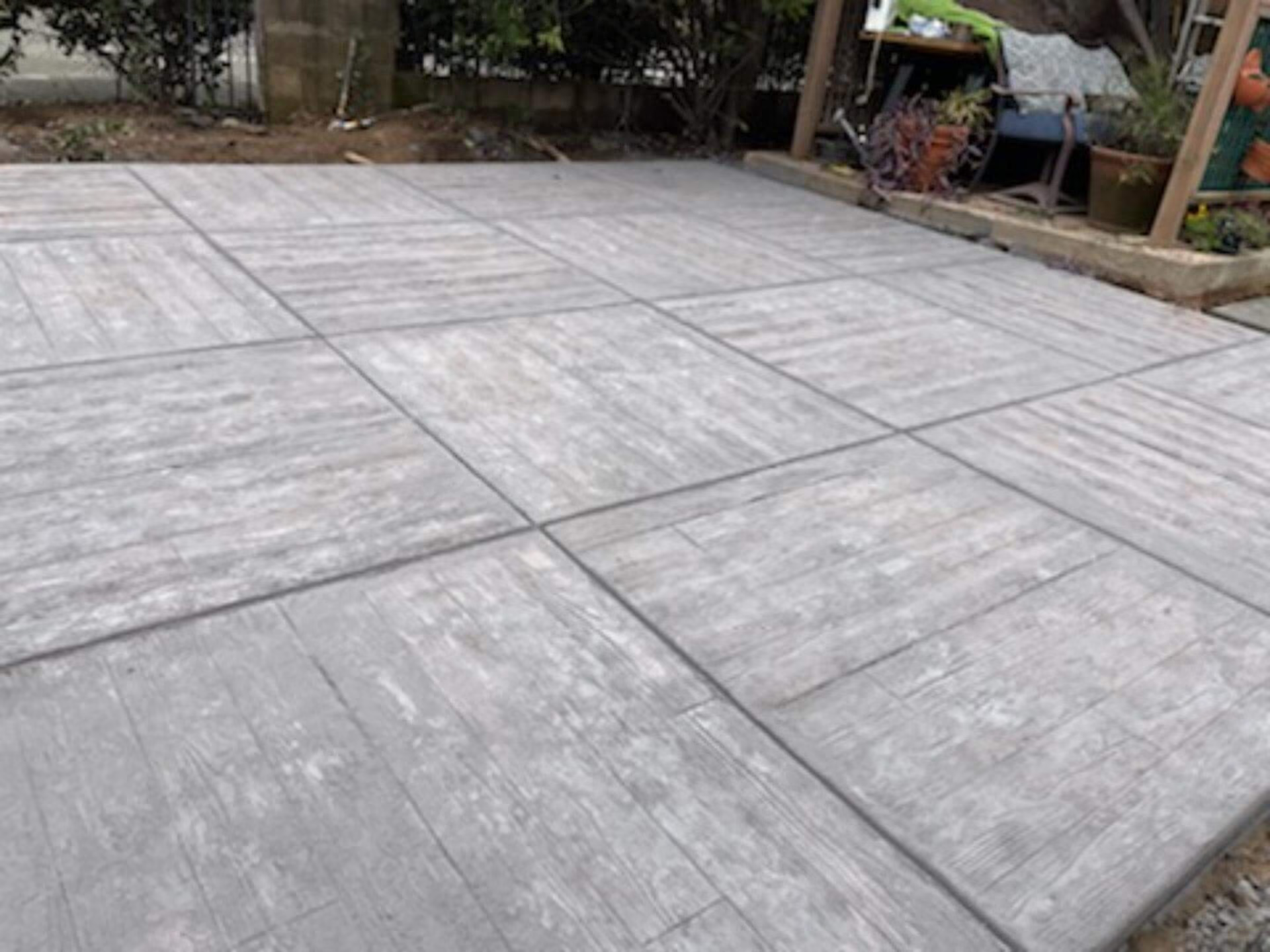 Concrete SlabsWhether you require a foundation for a structure, a patio or a driveway, we craft high-quality concrete slabs tailored to what the job asks for.View
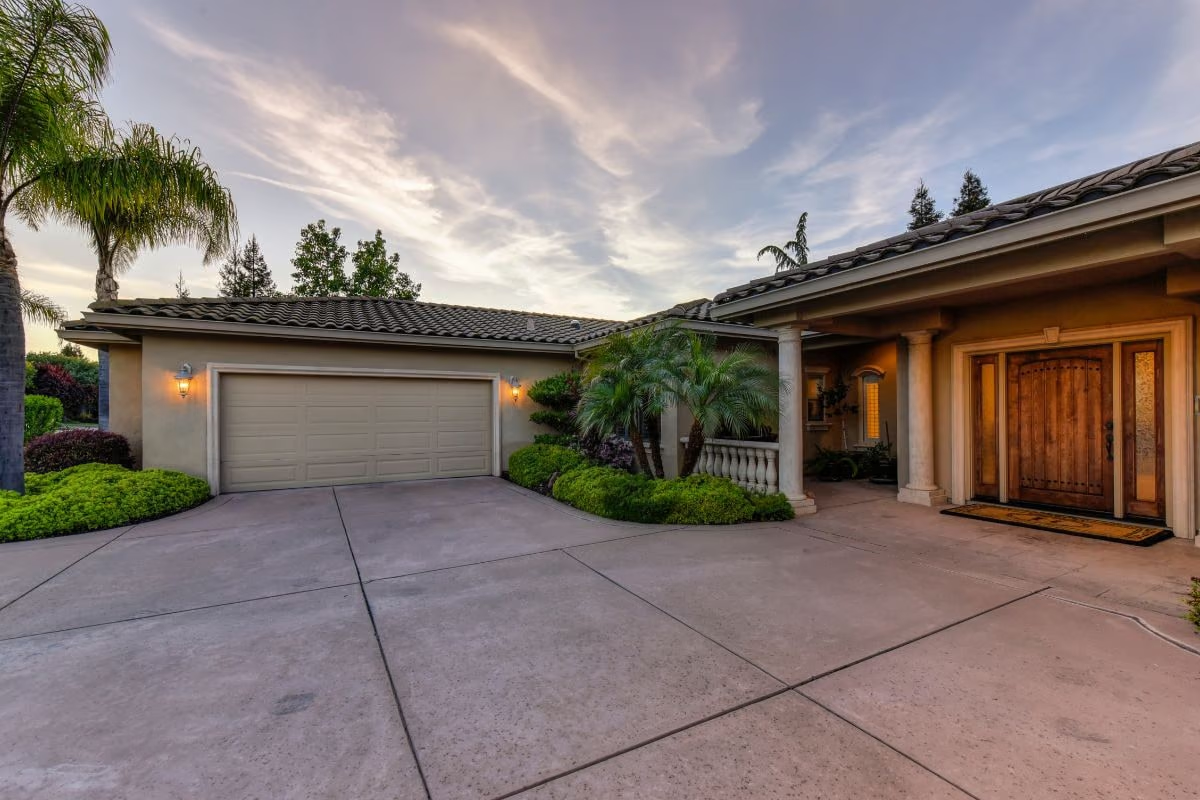 Concrete RepairWe specialize in concrete surface repairs (crack repair, surface repair, and concrete preparation repairs) as well as driveway repair and replacement.View
- All Concrete ServicesThe full list, from a garden path to a parking lot.View

Free Estimates
Let's Talk About the Concrete You Need
Tell us about the job and we will come out and look at it. Estimates are free, and there is no charge for the visit.